Frequently Asked Questions
We know you may be facing some very challenging questions. If you don’t find the answers below, please get in touch.
We know you may be facing some very challenging questions. If you don’t find the answers below, please get in touch.
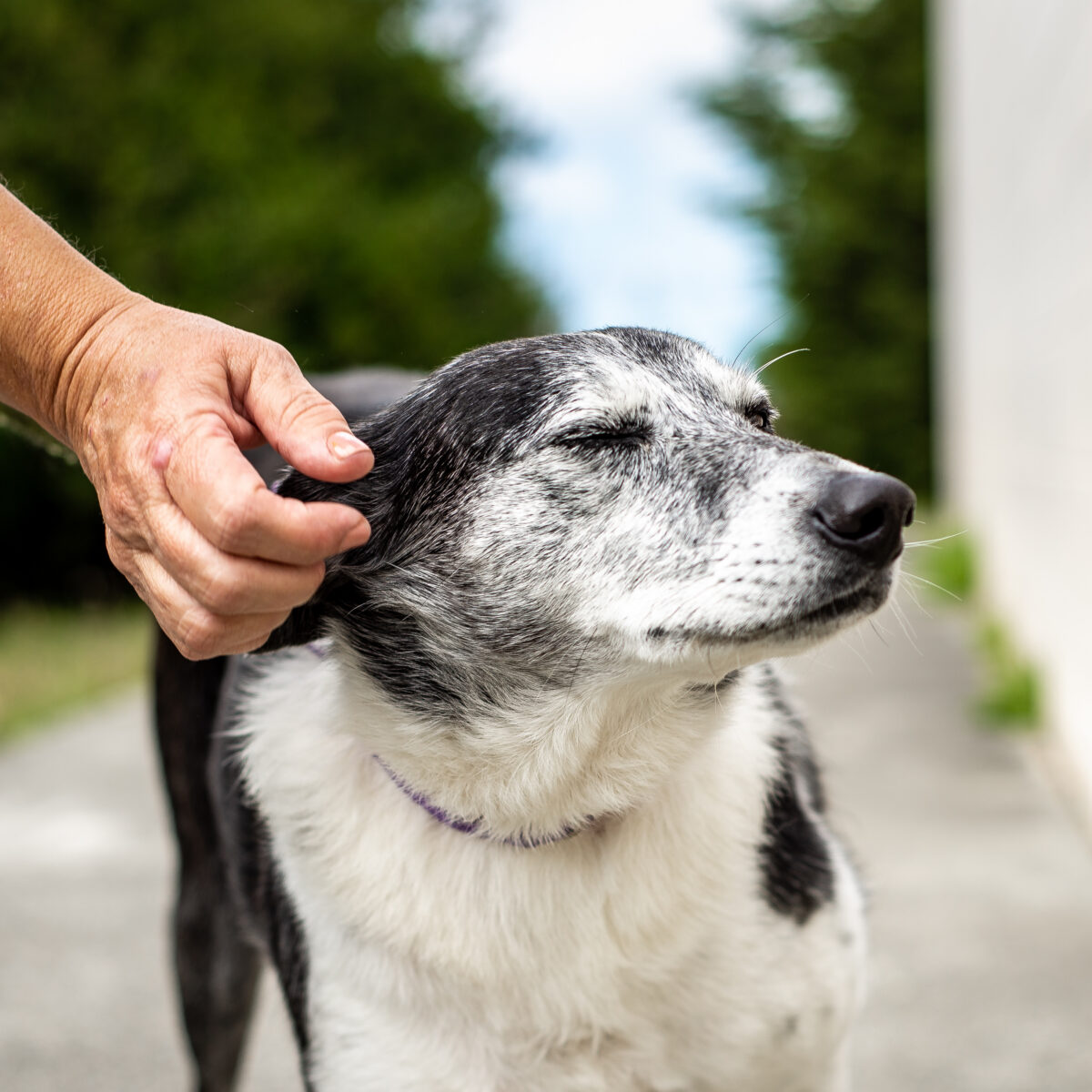
There’s no simple answer to this question, and it’s different for every family, but there are some common threads. First, it helps to think of the time for euthanasia as a window of time (which may be short or long) where it’s a good decision for your pet—rather than one single moment which you somehow have to magically know and perfectly arrive at. Reading our article about this question, completing the JOURNEYS quality-of-life scale, and/or having a consultation with Dr. Bruner can help bring some more clarity to whether the bad is outweighing the good, which is the major (but not easily answered) question.
Yes, you can have a consultation at home. Or if you’d like to talk to Dr. Bruner on the phone first, you can schedule a phone consultation. Our support staff (802-323-5200) are also very compassionate, listen well, and are specially trained to help with end-of-life issues.
For most aging pets, getting around is harder, and mobility issues are worsened by pain. Have a plan to look for and treat pain, and bear in mind that chronic pain may be hard to see. Confusion (dementia) and loss of vision and hearing are common, and can lead to anxiety (for your pet and for you!), which can also be a big quality-of-life issue. Please see our Resources section for more information on both topics. And of course there may be medical issues specific to your pet that your regular vet may have some suggestions about.
This depends on what your pet’s medical issues are, and a good place to start is with your regular vet. You might not have been able to think clearly at the time you heard the news; you can ask to talk again once you’ve gathered your thoughts. Don’t hesitate to make a list of your questions and ask for a phone or recheck appointment to discuss them. Ask about comfort-based care, sometimes called “palliative care,” as well as options for diagnosis and treatment. A vet website for clients, veterinarypartner.com, has a lot of good up-to-date information about all kinds of medical issues.
These are common signs of dementia, also known as Canine or Feline Cognitive Dysfunction Syndrome (FCDS, CCDS), or senility. Nighttime restlessness can also be a sign of pain, so it’s important to address that too. For more information, please see the article on dementia in our Resources section. Your pet’s confusion can have a big effect on your quality of life and is a major contributor to what makes caring for a senior pet so time-consuming and challenging.
This is so common; many, many people have this thought. You’re not weird, and you don’t need to feel guilty. Basically, this tells you that your pet’s quality of life has declined to the point where the bad is generally starting to outweigh the good, but there are still some good things left—or maybe not so many good things—and you are starting to think that their life has become pretty difficult, enough so that perhaps it would be better if they were no longer alive. But you are not sure, and it’s incredibly hard to have to be “the decider” that someone’s life should end, especially someone you love.
This thought reflects the fact that if the decision were taken out of your hands, it would be a relief in some ways (and would seem to be the universe’s or God’s answer to the question of whether it is time). Having this thought can be a helpful signal that your pet is in that window of time (see the answer to the first question above) where euthanasia might be a good decision for your pet—especially if you would rather make sure that things are as peaceful as possible, rather than waiting for a crisis.
While it’s true that loss of appetite can often be a sign that something is seriously wrong with your pet’s health, it’s not the only aspect of a not-good-enough quality of life. Especially when someone is declining very gradually, or has serious dementia (which is often under recognized; see previous question about nighttime restlessness), the things we always thought would tell us it was time don’t necessarily happen—yet we can clearly see that there are other problems. The JOURNEYS quality-of-life scale might be helpful, or you may want to talk to our support staff or schedule a consultation with our vet.
These are very common feelings—and very painful, too. You’re not alone. These feelings are not “wrong.” They’re your feelings, and they’re real. We don’t claim to have the “right” answer, but we see euthanasia as a natural part of the lifelong care we’ve given our pets, helping them to go as peacefully and painlessly as possible, surrounded with love.
It may also help to consider that you are not the one who has decided they must die; every living being’s life must end at some point. You are just trying to make sure that their life is comfortable and their death is as peaceful as possible. Nor are you the one who gave them their health problems, or their cognitive issues. You are just trying to help your pet the best way you can, but we cannot cure them of old age (or of most serious illnesses) and their problems are definitely going to progress and worsen with time. A euthanasia decision very often doesn’t feel good, or comfortable, but it can feel like the best of the difficult set of options we have.
In some cases, Dr. Bruner can be available on short notice, but we can’t reschedule other pre-existing commitments. We understand that pets can take a turn for the worse quickly, and will make every effort to help you as soon as possible during our normal hours. You can leave us a voicemail between 8 p.m. and 7 a.m., and we will return your call as soon as we can starting at 7 a.m. Please contact your regular vet or one of our urgent care services if we’re not available when you need help.
Dr. Bruner may be available on the same day you call. Most people make appointments a day or two in advance, though there are times when we’re booked ahead for three or four days. It’s hard to predict, so the more notice you can give us for booking your appointment, the better chance we have of finding a time that works for you. We do have a waitlist, and sometimes have cancellations on short notice.
Yes, with prior notice we can often accommodate an appointment in the evening or on a Saturday. Appointments are generally not available on Sundays. Evening (starting at 4:30 p.m. or later) and weekend appointments have an additional fee of $175.
No problem. This uncertainty is very common and very stressful. You can call and talk to our support staff, who are specially trained to help you figure this out; or you can make an appointment with Dr. Bruner for a consultation (either on the phone or at home) and find clarity that way.
You might be in this bind because you fear it may be time for euthanasia, but aren’t sure how to know it’s the right time, and making the decision alone feels impossible. Or because you genuinely have no idea what to look for or how to decide if your pet’s quality of life is good enough, or if anything can be done to improve things.
In either case, a consultation is super helpful to help you find out what makes sense to you, for your pet. And (especially if we know about your uncertainty beforehand) a consultation can turn into a euthanasia appointment, if that’s what you decide on. Dr. Bruner is always ready for any change in the plan at any time. (Please be aware that if the consultation has lasted an hour or more when you make this decision, depending on her schedule, Dr. Bruner may have to leave and return at a later time that day or the following day.)
This is one of the most difficult situations to have to make a euthanasia decision in, for so many reasons—maybe because of a recent biting event, or because you are worried that the end of their life may not be peaceful. We totally understand that. In most circumstances, Dr. Bruner can work with your pet successfully and peacefully, using sedation strategies such as oral medication before the euthanasia appointment. If your pet has bitten a person within the last ten days, Vermont rabies law requires either a ten-day quarantine to observe for rabies signs before euthanasia, or rabies testing. Please don’t hesitate to discuss your situation with our staff.
No, you do not need to send anything, though if you are having a consultation, recent medical records may be helpful. If you would prefer that we not contact your regular vet, please let us know; under typical circumstances, we do update them.
No, you do not need to have a regular vet. We are happy to work with you regardless.
No, we focus solely on end-of-life care at home, and don’t have a clinic location.
We welcome you to discuss any concern you have with us beforehand, or at your appointment, at any time. A bad euthanasia experience can be very traumatic and we will do everything in our power to make sure things go well. Usually this effort focuses on tailoring sedatives, and the sedation process, to your individual pet’s needs, based on their age, particular illness or health issues, and how they have responded to sedation and vet visits in the past. (Very occasionally a pet has an unexpected excitement response to a sedative; the way to help them through this is to give more of a different type of sedative.)
Your input and suggestions are very helpful here and we are more than glad to hear them, as well as to answer any questions you have, or explain anything unfamiliar you’re wondering about.
You don’t have to do anything in particular, since Dr. Bruner will bring everything she needs with her. You might want to help your pet pee and/or poop shortly before the appointment time (but please don’t worry about this, especially if it’s difficult or painful for them to move; we have a backup plan). It’s helpful to choose a location where they and you feel comfortable, where there’s enough room for everyone to be as close as they want to be (again, don’t worry about this if getting around is hard; we can go wherever your pet is). This is on the floor, but can be on a couch or bed, if that’s more comfortable.
We will do everything humanly possible to make the euthanasia experience as peaceful and comfortable as we can for both you and your pet. Please feel free to share any concerns or helpful information with us in advance, or at your appointment. If you think your pet would benefit from some oral sedation or pain medication before Dr. Bruner gets there, please let us know. Once she arrive, she’ll discuss sedation with you, and will (gently) explain what to expect through the whole appointment. All of our sedation plans and meds are designed for maximum comfort and relaxation. For more information, you can read the article about the euthanasia process, or watch our video about it, in our Resources section.
Yes. If Dr. Bruner has any concerns about your safety during your pet’s sedation, she’ll check in with you fully about that. We understand that your pet feels safest and happiest when they are with you, and that this is an important time for you to be close to them.
First, we can discuss any questions or concerns you have—only if you want to. Dr. Bruner will explain everything at the beginning, and will add information as needed as we go along. She will give your pet sedation medication so they relax, have pain relief, and gradually become less and less aware. You can be with them and talk to them and pet them the whole time. Once they are deeply sedated and totally unaware of anything, Dr. Bruner will give an injection of medication that will peacefully end their life. Afterwards, when you’re ready, she can take them with her for cremation if you choose. (For a more detailed description, please see the Resources article about the euthanasia process.)
For most euthanasia appointments, from the time Dr. Bruner arrives until she leaves, it’s about 45–60 minutes. This allows time for you to ask questions, if you have them, or discuss things, if you want to; and for your pet to fully respond to the sedation and the euthanasia medication; and for you to be with them for a time afterwards, in private, if you want. If you need an extended consultation beforehand, or you want to pause in the middle for some private time, we can do that. Likewise, if you want things to move more quickly, feel free to say so, and Dr. Bruner will do her best to make that happen. Please see the Resources article or video on the euthanasia process and our page about quality-of-life consultations for more information.
Dr. Bruner can make a clay paw print after your pet is sedated, and will ask during your appointment if you would like one. (There is no extra fee for the print.) If you would like help with other options, just ask—she is glad to help.
We can be anywhere you and your pet feel comfortable, including outdoors. If it’s sunny and hot, please be sure we have shade for your pet; if it’s cold, please let us know in advance so we can prepare.
Yes, as long as you feel comfortable, and the location is within our service area. A public place is okay, and legal, but we recommend serious thought about how distracting and/or stressful the curiosity and possible negative responses of any passersby might be to you. Also, since most public places are a significant distance from available parking, you’ll likely want to consider how difficult the transportation of your pet’s body might be afterward.
Anyone and everyone you would like can be there. Dr. Bruner is happy to meet (and discuss things with, as needed) anybody who’s important to you. Please see our Resources videos on kids (and other pets) and pet loss, or talk to our staff, for our thoughts on including other pets and family members of various ages.
You are absolutely welcome to have music, or candles, or flowers—anything that feels right to you. If you have any special small objects to send with your pet for cremation, like a toy or a letter, that’s just fine too. (The crematory cannot accept larger objects like blankets.) If you would like to take some time during your appointment to read something meaningful out loud, or to share stories, please feel free to do so; Dr. Bruner is deeply honored to be a part of this, or also fine to leave you in private for a bit, as you prefer. Or you might not want to talk at all, and that’s totally okay.
We have worked with the same local, reliable cremation service (Mill Hill Pet Crematory, now Final Gift, in Northfield) for over twenty years, and know the staff to be careful and trustworthy people who follow strict organizational and tracking procedures through the whole process of cremation and return to you. Please feel free to ask any questions you have about cremation.
Dr. Bruner will personally take care of the return of your pet’s ashes. She will let you know (usually by text) when she’s received your pet’s ashes and you can make a plan: She will meet with you in the Montpelier/Barre area, or bring them to you next time she’s in your area, or you can have her send them to you via UPS, FedEx, or USPS at no additional cost.
Yes, you can work directly with a local vet or with Final Gift in Northfield, VT, or Plattsburgh, NY (different locations offer slightly different services), or Island Memorial in Fairfax, VT.
Yes, burying pets (and humans!) at home is legal throughout Vermont, though some towns may have ordinances about required distances from water sources. It is best to be at least fifty feet from any water or well. Ideally, a burial depth of three to four feet is recommended to protect your pet from other animals who may dig, as well as to protect other animals from possible exposure to toxins from the euthanasia process.
We do not currently know of a Vermont pet cemetery, but if you find out about one, please let us know so we can share that information with others.
Most home and phone consultations are 60–90 minutes, although they can be shorter if you feel you don’t need all that time. There are a lot of feelings to work through, usually, and a lot of information to discuss, and Dr. Bruner doesn’t want to rush you through that—and fortunately, since we are outside of the busy clinic framework, she doesn’t have to.
You don’t have to do anything special, but if you’d like to, going through the JOURNEYS quality-of-life scale or spending a few moments making a list of your concerns can be really helpful.
Dr. Bruner will talk with you (and other family members if you wish—any number of people can be there) about how your pet is doing, how you’re doing, how you can maximize your pet’s quality of life, what the future might hold, and how to approach end-of-life decisions. She can also address questions about other family members (like kids, other pets, or elderly people) who will not be directly involved in decision making. When family members who are “deciders” are not on the same page, Dr. Bruner can help you talk about your concerns and come to a place of mutual understanding. She will review what happens during the euthanasia process, her availability for appointments, and what to do in case of emergency. And you can talk about anything else that might be on your mind! See the article on consultations in our Resources section for more information.
If you would like them to have one, or if they haven’t had one in a while, or if there’s a particular question about how they’re doing physically, Dr. Bruner will examine your pet to the extent you wish. Because the orientation of our conversation is toward comfort, rather than diagnosis and specific treatment, an extensive exam is often not necessary.
No. If you decide that you want diagnostic testing or specific treatment, you can pursue that with your regular vet or a specialist. Dr. Bruner was a regular vet for over 15 years before focusing on end-of-life care, so she has lots of direct experience in medicine and surgery. She is happy to discuss the reasons you might or might not want any type of test or procedure, and can give a ballpark estimate of what things might cost.
Yes. Our schedule is typically set up with extra time to accommodate a full consultation and a euthanasia at one visit. If the consultation part has taken an hour or more, Dr. Bruner will add a consultation fee to the euthanasia fee. Very rarely, she might need to return at a later time that day or the following day to complete the appointment (with an additional fee for the second appointment), so that she won’t be extremely late for another family’s appointment.
We have a $75 discount for multiple pets’ care at the same appointment. Other than that, our fees are based on what we need to charge to be able to pay the staff, the crematory, and Dr. Bruner adequately, and can’t be adjusted.
We can do a payment plan with a half payment up front, and half at the time of the appointment. In the situation where you’re expecting the return of your pet’s cremated remains, we can add the second payment then. All payments need to be completed at the last time Dr. Bruner will be seeing you.
Yes. Every Vermont county has a humane society that will perform low-cost euthanasia of your pet for you. It’s important to be aware that this would not be at home. You may not be able to be with your pet, depending on the shelter’s policies.