Mobility and Pain
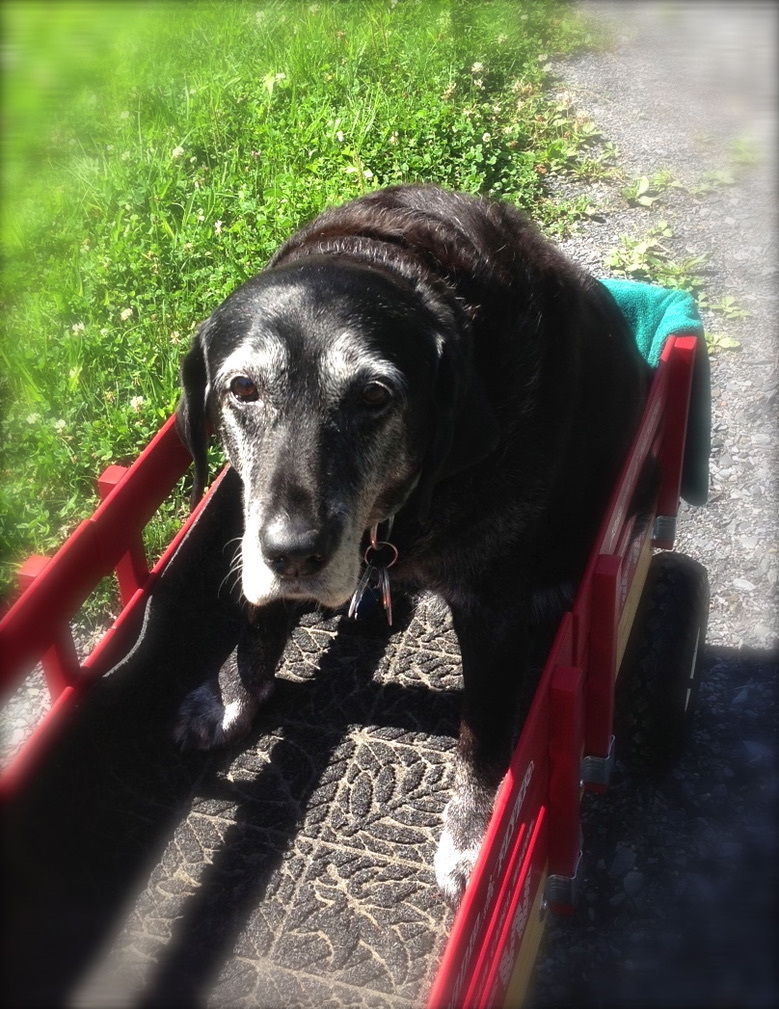 Mobility (getting around) is the number-one problem of aging pets, and this is true for cats as well as dogs, though cats seem to hide it better. While some mobility problems are caused by weakness or by nerves not sending messages properly, neither of which is inherently painful, the primary cause of mobility problems in aging pets is pain.
Pain isn’t always obvious to observers. Maybe it’s because our pets don’t dwell on and worry about their pain the way humans do, or maybe it’s because they’re dealing with chronic pain and what we’re looking for are actually signs of acute pain (for example, crying out, which isn’t typically seen with chronic pain). If your pet stumbles, limps, or walks stiffly; if they are no longer able to easily climb stairs or jump up on the couch or bed; if they don’t spend as much time walking or playing as they once did—they may be hurting.
Over and over, when I was a regular vet in a clinic, I heard people tell me their old pet wasn’t in pain; yet if I was able to convince them to try out pain medications, so often they would come back to tell me their pet was feeling much better—more active, happier, playful. Chronic pain is usually indistinguishable from weakness to the observer; the only way to truly know if our pets are in pain is to try to relieve pain and see if they feel better. Do you notice that your pet doesn’t jump up or lie down as quickly as they once did? Speaking as a middle-aged person with this same issue, this is a key sign that they may be getting painful.
Pain Medication Trials Help Us Assess Comfort
If your pet is older, and seems to have slowed down, consider trying a prescription pain medication daily (or twice a day, if directed) for at least a full week, ideally two, to see if your pet feels better. If not, they probably don’t need pain medication on an ongoing basis; but try a pain meds trial again in 6 months or so (remember that 6 months is equivalent to about 2-4 human years for a dog or cat!). Or perhaps it’s time to start using pain meds intermittently for your dog, if you notice more stiffness after a long hike or a big swim session.
Once we’ve done all we can to relieve pain, our pets can still use some help for the weakness and lack-of-good-nerve-messages parts of their mobility challenges.
Steps and Ramps
Is something your pet wants to access too high? For both dogs and cats, steps and ramps may help. It’s key to introduce these things before they are desperately needed; most of the time we wait too long, and then these aids aren’t accepted because they’re scary and new, and getting up them has become too difficult. Make sure that ramps aren’t too steep (they should be two to four times longer than the stairs they cover), and that steps and ramps are totally stable, and wide enough to feel secure. Any rocking or unsteadiness of the ramp or steps will lead to rejection. The best steps are deep enough that all four feet can fit (the pet can stand on the step); especially as they age, pets may need to rest on a step before continuing.
Nail Trims
Nobody loves these, I admit, but they’re really important for mobility.
Dogs
Long nails make it much harder for the grippy surface of dogs’ toe pads to contact the floor comfortably. Burring down nails with a dremel-type tool is often better than clipping nails, especially with arthritic toes. There are lots of YouTube videos about this, but the key to acceptance is usually not covered sufficiently: Go very gradually with these tools. Don’t start right in with a trim; just have one person turn the tool on across the room, and a second person give treats, until the dog is excited about the sound of the tool; then move closer, more treats; then next to them (don’t touch them!), more treats; then touch the turned-off tool to their leg, more treats; then to their foot, more treats… at each tiny incremental step, don’t progress to the next until they’re totally calm and happy about the current step. For most dogs, this looks like 3-4 daily training sessions, 2-5 minutes each, over 2-3 weeks, for each step.
Cats
When they stop clawing things to shorten their own nails, their nails grow in a circle and can actually grow right into their foot, piercing the skin and forming a painful wound. Check each toe carefully. Clipping works better than a dremel for most cats, but it usually takes a very gradual work-up with treats to get there comfortably (see above).
Slings and Harnesses
These help us pick up a bigger dog who routinely needs help with their hind end to get up the stairs, off the floor, or out of a vehicle. To start out, a thin beach towel can be used as a sling for a dog’s hind end (just loop it under their belly to support their hips, and hold both ends up); if you’re using this more often, think about a sling like a GingerLead whose wide, flat surface might be more comfortable. For most dogs, a Help-Em-Up harness (or similar) is useful once they need help pretty much every time they get up off the floor; the chest harness is handy, but it’s mainly there to be an attachment point for the back-end harness. I’ve yet to see a back-end-only harness that stays on by itself, but would be glad to hear about one if you’ve found it!
Yoga Mats and Carpet Runners or Carpet Tiles
When your dog’s feet are slipping on bare floors, we can either make the floor more grippy (usually the easiest and lowest-maintenance option) or the dog’s feet more grippy (see below). Yoga mats are a great low-profile, cheap, and grippy choice, at $4-12 for a five-foot long mat; carpet runners, carpet tiles, or area rugs also work great.
Toe Grips, Socks, Boots, Pad Stickers
This is how we make the dog’s feet more grippy. These options are definitely less ideal than modifications to the floor: They need frequent replacement, and in the case of ToeGrips you have to check them daily to be sure they’re not pressing into the toes and causing injury. Socks and boots have to be removed so feet can dry; even without external sources of dampness, feet give off their own moisture, and skin infections can be caused by chronic dampness.
If you are concerned that your pet may be in pain, please talk to your vet about a pain medications trial. People are often leery of starting their pets on meds, fearful of side effects or dependence, but pain medication can be such a huge help to quality of life—we owe it to them to try.